
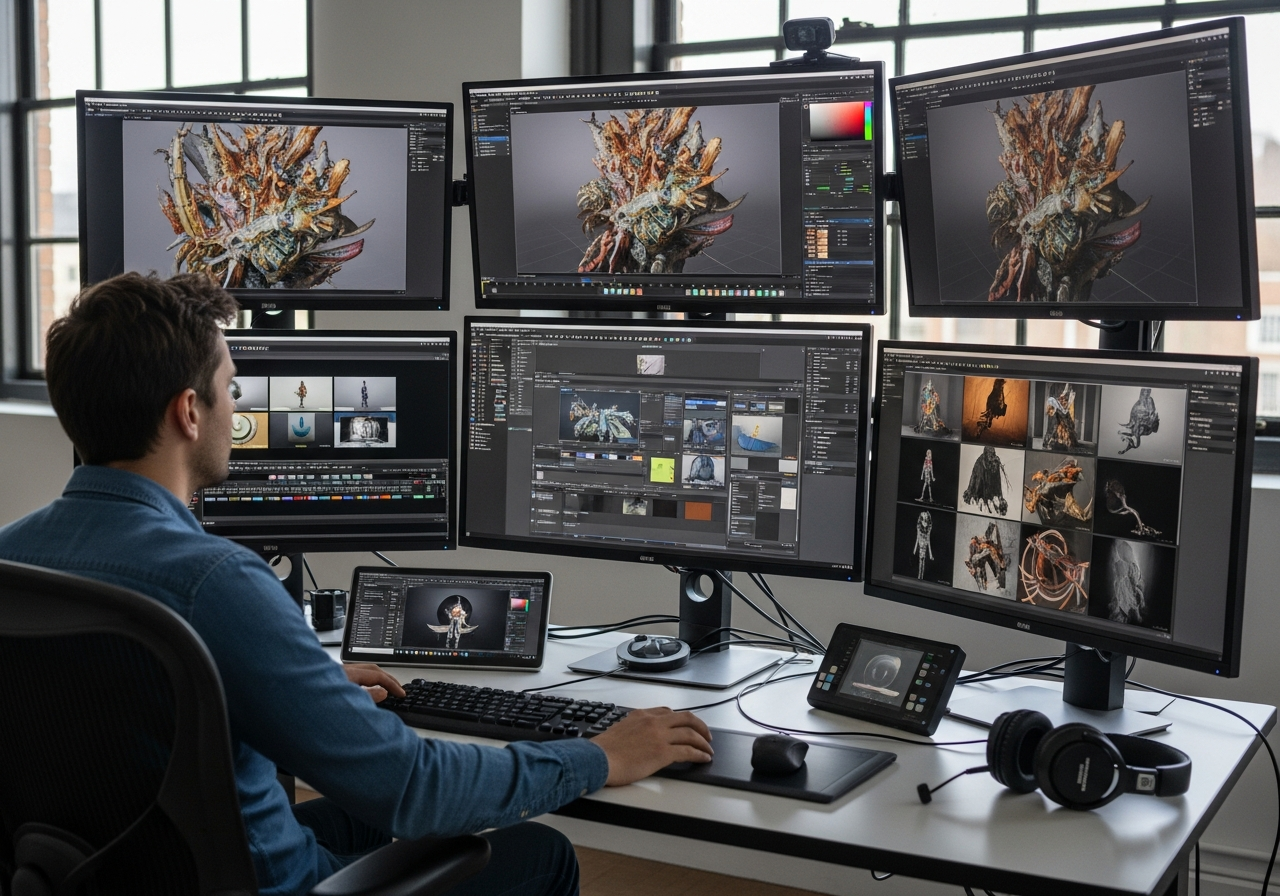
Canadian VFX studios have evolved beyond simply reviewing portfolios and demo reels when hiring lighting artists. Today’s competitive market means studios need to validate not just your artistic eye, but your technical workflow, problem-solving abilities, and how you handle real-world production constraints. Technical tests have become a standard part of the hiring process, serving as a bridge between your portfolio presentation and actual job performance.
This comprehensive guide covers the specific test formats, software expectations, and task types you’ll encounter when pursuing lighting roles at Canadian studios. Whether you’re targeting shot lighting, look development, or rendering positions, understanding what studios test for—and how they evaluate results—gives you a significant advantage in landing your next role.
How Canadian VFX Studios Use Technical Tests for Lighting Roles
Studios implement technical tests for lighting positions to validate workflow efficiency and problem-solving approaches that portfolios alone cannot demonstrate. While a demo reel showcases your best work over months or years, a technical test reveals how you think, organize, and execute under realistic production conditions. Canadian studios particularly value this insight because their fast-paced episodic and feature animation pipelines demand artists who can deliver consistent quality within tight deadlines.
Technical tests commonly appear at three key hiring stages: pre-interview screening, post-interview validation, and during probationary training periods. Pre-interview tests help studios narrow large candidate pools by identifying artists who meet baseline technical requirements. Post-interview tests dive deeper into specific skills discussed during conversations, while training period assessments ensure new hires integrate effectively with existing teams and workflows.
The format mirrors educational VFX program assessments, testing both artistic fundamentals and technical proficiency. Studios want to see how you balance creative vision with practical constraints, manage render times, organize scene files, and communicate your lighting choices. This approach helps predict not just your individual performance, but how well you’ll collaborate within larger lighting teams common at major Canadian facilities.
Beyond technical skills, these tests reveal soft skills crucial for studio environments: how you handle feedback, adapt to unfamiliar assets, and maintain quality standards when time pressures mount. Canadian studios particularly appreciate candidates who show curiosity about pipeline tools and demonstrate clear communication about their creative decisions.
Typical Stages Where Lighting Tests Appear in Canadian Hiring
| Hiring stage | Test format | What you submit | How it’s evaluated |
|---|---|---|---|
| Portfolio review stage | Simple lighting assignment | Rendered images + scene files | Technical workflow and file organization |
| Final interview round | On-site practical test | Live demonstration + brief walkthrough | Real-time problem solving and communication |
| Training period | Studio-specific pipeline test | Production-ready shots using studio tools | Integration with existing workflow and team feedback |
| Contract-to-hire evaluation | Extended project assignment | Multiple shots over 1-2 weeks | Consistency, speed, and response to supervisor notes |
Understanding these stages helps you prepare appropriately for each test type. Portfolio-stage tests focus on demonstrating baseline competency, while on-site tests evaluate how you think through problems in real-time. Training period assessments emphasize adaptability to studio-specific workflows, and extended evaluations test your consistency over multiple assignments.
The evaluation criteria shift depending on the hiring stage, but Canadian studios consistently look for clean file organization, efficient workflows, and clear communication about your creative choices. Preparing for these different contexts ensures you can adapt your approach based on what each stage prioritizes.
What Studios Really Want to See Beyond Your Reel
While demo reels showcase finished results, technical tests reveal the process behind those results—and process matters enormously in production environments. Studios want to see self-sufficiency in troubleshooting render issues, managing complex scenes, and maintaining quality under time pressure. They’re evaluating whether you can work independently without constant supervision, particularly important in Canadian studios where lighting teams often handle multiple concurrent projects.
Soft skills become apparent through technical tests in ways portfolios cannot demonstrate. How you receive and interpret feedback, your curiosity about unfamiliar tools, and your ability to explain creative choices all factor into hiring decisions. Canadian work culture values collaborative, communicative artists who can articulate their approach clearly and adapt when directors request changes. Studios also watch for constraint-handling skills—how you balance ideal artistic vision with practical render times, file sizes, and delivery schedules that real productions demand.
Common Formats of VFX Lighting Technical Tests in Canada
| Format | Location (remote/on-site) | Time limit | Inputs provided | Deliverables | Pressure level |
|---|---|---|---|---|---|
| Take-home assignment | Remote | 24-72 hours | Scene files, reference images, brief | Final renders + scene files + notes | Low to moderate |
| On-site practical | Studio office | 2-4 hours | Pre-loaded assets on studio machines | Work-in-progress + verbal walkthrough | High |
| Portfolio extension | Remote | 1 week | Generic assets + style guide | Publication-ready breakdown | Moderate |
| Training simulation | On-site or remote | Multiple sessions | Real production shots (simplified) | Iterative submissions based on notes | Variable |
| Live problem solving | Video call or on-site | 1-2 hours | Broken scene files needing diagnosis | Fixed scenes + explanation of issues | High |
Each format tests different aspects of your lighting skills and work style. Take-home assignments allow you to demonstrate your best work quality and organizational skills without time pressure, while on-site practicals reveal how you perform under observation and tight deadlines. Portfolio extensions bridge the gap between your existing reel and studio-specific requirements, helping evaluators see how you’d handle their particular artistic style or technical pipeline.
Canadian studios often adjust test complexity based on the seniority level they’re hiring for. Junior positions typically receive more guided assignments with detailed briefs and pre-configured scenes, while mid-level and senior roles face more open-ended challenges that test decision-making and leadership potential. Understanding this distinction helps you calibrate your expectations and preparation approach.
Training simulations have become increasingly popular at larger Canadian facilities, as they most closely mirror actual production conditions. These multi-session evaluations let both you and the studio assess long-term compatibility, work pace, and how well you integrate feedback from supervisors. The iterative nature of these tests also demonstrates how you handle revisions and maintain enthusiasm across multiple rounds of notes.
Time Constraints and Realistic Productivity Expectations
Typical time windows for lighting tests range from 2-4 hours for on-site evaluations to 24-72 hours for take-home assignments. Studios calibrate these timeframes based on the complexity of the task and their expectations for the role level. A junior-level character lighting test might allow 48 hours to set up basic three-point lighting and render clean beauty passes, while a senior-level environment lighting test could demand complex atmosphere, multiple time-of-day variations, and full AOV splits within the same window.
Effective time management under test conditions requires prioritizing core requirements over polish details. Focus first on achieving the primary lighting goals outlined in the brief—proper exposure, clear focal hierarchy, and mood consistency—before adding secondary elements like atmospheric effects or subtle fill adjustments. Canadian studios prefer submissions that nail the fundamentals completely rather than ambitious attempts that leave basic requirements unfinished. Always reserve the final 20-30% of your time for rendering, file cleanup, and organizing your submission materials, as technical presentation often weighs as heavily as artistic results in the final evaluation.
Core Technical and Artistic Skills Studios Test in VFX Lighting
- Physically-based rendering principles including proper material setup, light temperature consistency, and exposure management across all scene elements
- Advanced shading techniques for both character and environment work, demonstrating understanding of subsurface scattering, metallic workflows, and atmospheric integration
- AOV and render pass organization following industry naming conventions, with clean separation of diffuse, specular, reflection, and utility passes
- Linear workflow implementation including proper color space management, gamma correction, and OCIO configuration for studio pipeline compatibility
- Problem-solving abilities for common lighting challenges like render noise reduction, light linking optimization, and memory management in complex scenes
- Integration skills for matching CG lighting to live-action plates or maintaining consistency across multiple shots in sequence work
- Pipeline efficiency including proper scene organization, asset referencing, and preparation of files for downstream compositing teams
These core competencies form the foundation that Canadian studios expect from lighting artists at all levels. Technical skills often receive equal weight with artistic abilities, particularly in episodic television and feature animation pipelines where consistency and efficiency drive production schedules. Studios test these areas through practical assignments rather than theoretical questions, wanting to see how you apply knowledge under realistic working conditions.
The connection between these skills and Canadian pipeline requirements becomes apparent in the specific tools, naming conventions, and workflow expectations that major facilities have standardized. Understanding Linux-based render farms, shot-based file organization systems, and collaborative workflows using tools like ShotGrid helps demonstrate your readiness for studio environments rather than just freelance or student work.
Canadian studios also emphasize the integration aspects of lighting work, recognizing that modern productions involve multiple departments collaborating on shared assets. Your ability to work with files from modeling, texturing, and animation teams—while preparing clean handoffs to compositing—often determines your effectiveness more than pure lighting artistry. Tests frequently evaluate this collaborative workflow understanding alongside individual creative skills.
Artistic Fundamentals: Mood, Story, and Readability
- Establish clear silhouette separation between foreground, midground, and background elements using strategic light placement and shadow design
- Control value hierarchy to guide viewer attention toward story-critical elements, using contrast and exposure to create clear focal points
- Maintain consistent color temperature logic that supports the emotional tone while remaining believable within the scene’s environmental context
- Design shadow patterns that enhance character psychology and environmental storytelling rather than simply providing realistic illumination
- Balance practical light source motivation with dramatic enhancement, ensuring lights feel naturalistic while supporting narrative goals
- Create depth and atmosphere through careful management of falloff, haze, and volumetric effects that add dimensionality without overwhelming foreground action
These artistic checks form the evaluative framework that supervisors use when reviewing lighting test submissions. Canadian studios particularly value storytelling clarity, as their episodic and feature animation work demands lighting that supports narrative flow across hundreds of shots. Technical proficiency means little if your lighting choices confuse viewers or detract from character performances.
The emphasis on mood and readability reflects the collaborative nature of VFX lighting work, where your creative choices must integrate seamlessly with direction from cinematographers, VFX supervisors, and animation directors. Tests often include reference materials or mood boards to evaluate how well you interpret and expand upon established visual languages rather than imposing your own stylistic preferences.
Technical Fundamentals: Rendering, AOVs, and Color Management
Managing render noise effectively while maintaining reasonable render times requires understanding sampling strategies, denoising workflows, and optimization techniques specific to your chosen renderer. Canadian studios typically use Arnold, RenderMan, or V-Ray in production, each with distinct approaches to noise management and sampling efficiency. Tests often include scenes with challenging lighting conditions—complex reflections, subsurface scattering, or volumetric effects—that reveal your understanding of renderer-specific solutions and your ability to balance quality with practical time constraints.
AOV organization and naming conventions follow industry standards that facilitate compositing workflows, but Canadian studios often have specific requirements based on their pipeline tools and delivery specifications. Understanding how to separate render elements cleanly while avoiding unnecessary passes that bloat file sizes demonstrates production awareness. Color management becomes crucial when working with ACES or studio-specific OCIO configurations, particularly for projects that integrate multiple rendering engines or need to match practical photography. Time pressure during tests makes it essential to have these technical workflows automated or memorized, as struggling with basic setup reduces time available for creative problem-solving.
Software and Pipeline Expectations for Canadian VFX Lighting Tests
| Tool | Typical use in tests | Skill depth expected (junior) | Skill depth expected (mid-level) | Canada-specific notes |
|---|---|---|---|---|
| Maya + Arnold | Primary lighting and rendering platform | Basic light types, material assignment, render settings | Light linking, AOV setup, optimization techniques | Standard at most Vancouver and Toronto studios |
| Katana | Look development and complex scene assembly | Basic node network navigation, asset loading | Advanced material networks, lighting templates | Preferred at feature animation studios |
| Nuke | AOV compositing and integration testing | Basic compositing, color correction | Advanced AOV workflows, color management | Essential for lighting artists doing own comps |
| Houdini | Procedural lighting setups, volume rendering | Basic scene navigation, light creation | Lighting networks, Karma/Mantra workflows | Growing adoption for FX-heavy projects |
| RenderMan | High-end feature work, complex materials | Basic shader setup, render queue submission | Advanced material authoring, deep AOV control | Pixar pipeline influence at animation studios |
| Linux/Terminal | File management, render farm interaction | Basic navigation, file copying | Script execution, troubleshooting render jobs | Universal requirement across Canadian facilities |
| Python scripting | Automation and pipeline tool creation | Reading and modifying existing scripts | Writing custom tools, API integration | Highly valued for efficiency improvements |
The software landscape in Canadian VFX lighting reflects both industry standards and regional preferences shaped by major facilities in Vancouver, Toronto, and Montreal. Maya with Arnold dominates episodic television work, while feature animation studios often prefer Katana for its sophisticated look development capabilities. Understanding these regional tendencies helps you prioritize which tools to emphasize in your preparation and how deeply to develop skills in each platform.
Pipeline tool integration becomes crucial in technical tests, as studios want to see that you understand how individual software pieces connect within larger production workflows. Tests might require you to render in Maya, composite AOVs in Nuke, and submit final deliverables through studio-specific asset management systems. This integration knowledge separates candidates with pure software skills from those ready for immediate production contribution.
Canadian studios increasingly value artists who can bridge technical and creative responsibilities, leading to test scenarios that combine multiple tools within single assignments. You might need to troubleshoot a complex Katana network, optimize render settings for Arnold, and present results through Nuke-based compositing workflows—all within the same evaluation period.
Linux, File Management, and Working Like a Studio TD
- Master basic terminal navigation including directory traversal, file permissions, and symbolic link creation for efficient asset management
- Understand studio file structure conventions with proper shot/sequence organization and version control practices
- Learn render farm submission procedures including job priority management and queue monitoring across distributed systems
- Develop troubleshooting skills for common pipeline issues like missing texture paths, broken asset references, and network storage access
- Practice efficient file transfer methods including rsync, scp, and studio-specific tools for moving large datasets between systems
- Familiarize yourself with environment variables, shell scripting basics, and how studio pipeline tools integrate with Linux workflows
Linux proficiency has become non-negotiable for Canadian VFX lighting roles, as virtually all major facilities run Linux-based production pipelines. Tests often include file management challenges that reveal whether you can work efficiently in terminal environments or struggle with basic system navigation. The ability to troubleshoot path issues, manage file permissions, and navigate complex directory structures directly impacts your productivity in studio environments.
Working like a studio TD means understanding how your individual work fits within larger technical systems and maintaining workflows that support collaboration rather than just personal efficiency. This includes following naming conventions, organizing files for easy handoff to other departments, and documenting your work in ways that facilitate troubleshooting and iteration.
Building a Lighting-Focused Portfolio and Reel That Leads to Tests
- Select 3-5 diverse lighting scenarios that demonstrate range: character beauty lighting, environment mood work, and technical integration challenges
- Create detailed breakdowns for each piece showing workflow progression from initial setup through final composite with clear explanations of creative decisions
- Include both beauty renders and technical passes (AOVs, wireframes, lighting-only passes) to demonstrate understanding of production workflows
- Ensure at least one piece shows integration work—matching CG lighting to practical plates or maintaining consistency across multiple shots
- Organize presentation materials professionally with consistent formatting, clear labeling, and easy navigation for busy supervisors reviewing many applicants
- Keep individual pieces concise but comprehensive, showing enough detail to understand your process without overwhelming viewers with excessive technical information
- Update portfolio regularly based on feedback and evolving industry requirements, particularly incorporating new tools or techniques common in Canadian pipelines
A lighting-focused portfolio serves as your gateway to technical testing opportunities by demonstrating the baseline competencies that studios want to evaluate further. Unlike generalist reels that showcase multiple disciplines, lighting portfolios need depth over breadth, showing sophisticated understanding of mood, technical execution, and production workflows. Canadian studios particularly value portfolios that demonstrate collaborative work and pipeline awareness, indicating readiness for team-based production environments.
The portfolio’s role extends beyond just securing interviews—it often influences the type and complexity of technical tests you receive. Strong portfolios that clearly demonstrate advanced skills lead to more challenging and interesting test assignments, while weak or unclear presentations may result in basic competency tests that don’t showcase your full capabilities. Investing time in portfolio quality directly impacts your ability to land roles that match your skill level.
Regular portfolio updates based on industry trends and feedback help maintain relevance in Canada’s competitive job market. Studios’ technical requirements evolve rapidly, and portfolios that demonstrate familiarity with current tools, techniques, and aesthetic trends stand out from those showcasing outdated approaches or software.
Portfolio Pieces That Predict Strong Performance in Tests
Portfolio pieces that best predict technical test success demonstrate problem-solving thinking rather than just polished final results. Include work that shows how you approached challenging lighting scenarios—complex environments with multiple light sources, character work requiring subtle mood adjustments, or technical integration pieces where you matched CG elements to practical photography. Studios want to see evidence of the analytical thinking that tests evaluate directly.
Diverse portfolio samples prove your adaptability to different project types and aesthetic requirements that Canadian studios regularly encounter. A character-focused piece, an environment establishing shot, and a technical integration challenge cover the core competency areas that most lighting tests assess. Showing range in these fundamental categories demonstrates broader capabilities than portfolios concentrated in single specialties, even if that specialty shows exceptional skill.
Writing Accompanying Notes That Show Your Process
- Document your initial creative goals and reference materials that influenced lighting decisions and overall aesthetic approach
- Explain technical challenges encountered and specific solutions implemented, showing problem-solving methodology rather than just final results
- Include brief workflow descriptions highlighting pipeline tools used and how files were organized for potential collaboration or iteration
- Note time investment and any constraints that influenced creative or technical decisions, demonstrating awareness of production realities
- Describe what you would change or improve given additional time or resources, showing critical evaluation skills and growth mindset
Well-written process notes transform portfolio pieces from static showcase items into learning tools that reveal your thinking methodology. Canadian studios highly value artists who can articulate their creative decisions clearly, as production environments require constant communication about artistic choices and technical approaches. Notes that demonstrate this communication ability often weigh as heavily as the visual work itself in portfolio evaluation.
Process documentation also shows respect for collaborative workflows where other artists may need to understand, modify, or build upon your work. This professional approach indicates readiness for studio environments where individual work rarely exists in isolation from larger team efforts.
Designing a Personal Practice Plan for VFX Lighting Technical Tests
- Assess current skill gaps by attempting mock tests in areas where you feel less confident, identifying specific technical or artistic weaknesses
- Establish regular practice sessions using freely available assets from sources like Morgan’s 3D Scans, Quixel Bridge, or studio-released test scenes
- Create timed mock test scenarios that simulate real studio conditions, practicing complete workflows from asset loading through final delivery
- Build a personal asset library of lighting setups, material templates, and workflow scripts that speed up common tasks during tests
- Schedule periodic self-evaluation sessions where you critically review practice work using industry-standard criteria and feedback frameworks
- Iterate based on identified weaknesses, focusing extra practice time on areas that consistently challenge you under time pressure
- Join online communities or local meetups where you can get feedback on practice work and learn about current industry practices and expectations
A structured practice plan transforms technical test preparation from sporadic skill-building into focused career development that directly improves your job prospects. Canadian studios appreciate candidates who demonstrate continuous learning and professional development, making your preparation approach part of your overall appeal as a potential team member. Regular practice also builds confidence that translates into better performance under test pressure.
The key to effective practice lies in simulating realistic conditions rather than perfecting work in comfortable environments. This means practicing with unfamiliar assets, working under time constraints, and using tools or workflows that stretch your current capabilities. Such challenge-based practice better prepares you for the unexpected elements that technical tests often include.
Asset sourcing for practice becomes crucial in maintaining engagement and building relevant skills. Free resources like film studio-released assets, game development resources, or educational materials provide professional-quality challenges without requiring expensive software licenses or asset purchases. Building relationships with other artists for asset sharing can also expand your practice options.
Weekly Practice Schedule Example for Aspiring Lighting Artists
| Day | Focus area | Activity example | Estimated duration |
|---|---|---|---|
| Monday | Character lighting fundamentals | Portrait setup with mood variations | 2 hours |
| Tuesday | Environment and mood work | Interior scene with time-of-day progression | 2.5 hours |
| Wednesday | Technical pipeline skills | AOV setup and optimization practice | 1.5 hours |
| Thursday | Integration and matching work | CG lighting to match practical plate | 3 hours |
| Friday | Timed mock test | Complete lighting assignment under deadline | 3 hours |
| Saturday | Review and analysis | Self-critique of week’s work and planning improvements | 1 hour |
This schedule balances skill development across the core competency areas that technical tests evaluate while maintaining realistic time commitments for working professionals or students. The progression from fundamental skills early in the week toward integrated challenges builds confidence and capability systematically. Friday’s timed mock test simulates real test conditions while Saturday’s review session develops critical evaluation skills essential for continuous improvement.
Adjust duration and complexity based on your current skill level and available time, but maintain the variety and progression structure. Consistency matters more than intensity—regular practice with moderate time investment typically produces better results than sporadic intensive sessions that lead to burnout or discouragement.
Mock Lighting Test Scenarios Based on Real Studio Expectations
| Scenario | Assets provided | Brief summary | Key skills tested | Suggested time limit |
|---|---|---|---|---|
| Hero character beauty shot | Rigged character model + simple environment | Create appealing portrait lighting that shows character personality | Artistic eye, character lighting, material understanding | 3 hours |
| Environment mood matching | CG environment + reference film stills | Match lighting mood and color palette from provided references | Reference interpretation, mood creation, color theory | 4 hours |
| CG integration challenge | Live-action plate + CG character model | Light CG character to match practical photography lighting | Light analysis, matching skills, integration techniques | 5 hours |
| Technical problem solving | Scene with render issues + brief problem description | Diagnose and fix lighting/rendering problems in existing scene | Troubleshooting, technical knowledge, pipeline understanding | 2 hours |
| Sequence consistency test | Multiple camera angles + hero lighting reference | Adapt hero lighting setup for different camera positions | Consistency maintenance, efficiency, production workflow | 4 hours |
| Look development assignment | Raw geometry + material reference images | Create complete look including materials and lighting setup | Material knowledge, artistic vision, technical integration | 6 hours |
These scenarios reflect common test formats used by Canadian studios, covering the full range of skills that lighting artists need in production environments. Each scenario targets specific competencies while providing realistic constraints and deliverable expectations. The variety ensures that your practice preparation covers all major areas where studios evaluate lighting talent.
Time limits reflect actual studio testing practices, with complexity and duration scaling appropriately for different skill levels and test purposes. Hero character beauty shots typically serve as junior-level assessments, while look development assignments often evaluate senior-level capabilities. Understanding these correlations helps you calibrate your expectations and preparation focus.
Regular practice with timed scenarios builds both technical proficiency and stress management skills essential for actual test performance. The key lies in treating practice sessions as seriously as real tests, including proper file organization, render management, and final presentation preparation. This comprehensive approach ensures that test day performance matches your actual capabilities rather than falling short due to unfamiliarity with testing conditions.
How to Self-Evaluate Your Mock Test Results Like a Supervisor
- Assess technical execution by checking render quality, AOV organization, file structure cleanliness, and adherence to any provided specifications or constraints
- Evaluate artistic success by analyzing mood consistency, focal hierarchy, color harmony, and how well the lighting serves the intended story or character goals
- Review workflow efficiency by examining how much work was completed within the time limit and identifying areas where better organization or tool knowledge could improve speed
- Examine problem-solving approach by noting how creative or technical challenges were addressed and whether solutions demonstrate understanding of underlying principles
- Consider professional presentation by reviewing file organization, naming conventions, render settings documentation, and overall submission quality
- Identify growth areas by comparing current work to previous attempts and noting consistent patterns in feedback or recurring technical issues that need focused practice
Self-evaluation develops the critical analysis skills that distinguish professional artists from hobbyists, helping you internalize the quality standards that studios apply during actual test reviews. This analytical approach also builds confidence by helping you recognize improvement over time and understand your current capabilities relative to industry expectations.
The framework mirrors supervisor evaluation criteria, making your self-assessment directly applicable to understanding how studios might judge your work. Regular practice with this evaluation approach helps you anticipate potential feedback and address issues proactively rather than discovering them during high-stakes testing situations.
Balancing Quality and Speed Under Test Conditions
Effective test performance requires understanding when to prioritize technical robustness versus visual polish, particularly under time constraints that prevent achieving both simultaneously. Focus first on meeting the core requirements outlined in the test brief—proper exposure, clear focal hierarchy, and mood consistency—before adding refinement details that enhance but don’t fundamentally improve the lighting solution. Canadian studios typically prefer submissions that demonstrate solid technical execution and clear artistic intent over ambitious attempts that leave fundamental requirements incomplete.
Speed-building strategies include developing personal template libraries, memorizing common workflows, and practicing efficient render settings that balance quality with time management. The goal isn’t to rush through work, but to eliminate inefficiencies that waste time without contributing to better results. This includes automation through scripting, consistent file organization systems, and render optimization techniques that reduce iteration time while maintaining professional quality standards.
Communication, Notes, and Presentation During Lighting Tests
- Organize submission materials with clear file naming, logical directory structure, and comprehensive documentation that allows easy review and potential iteration
- Write concise notes explaining creative decisions, technical challenges encountered, and solutions implemented to demonstrate thinking process beyond visual results
- Prepare brief verbal presentations that highlight key lighting choices, artistic goals, and how the work addresses test requirements without overwhelming reviewers with excessive detail
- Practice explaining technical setups in non-technical language for situations where supervisors or directors may not have deep lighting expertise but need to understand your approach
- Develop skills for receiving and interpreting feedback constructively, including asking clarifying questions and proposing practical implementation approaches for requested changes
- Create visual aids like lighting diagrams or before/after comparisons that help communicate complex setups clearly and professionally during presentation discussions
- Master the art of confident uncertainty—acknowledging limitations in your knowledge while demonstrating problem-solving approaches and eagerness to learn new techniques or tools
Professional presentation and communication skills often determine test success as much as technical or artistic abilities, particularly in Canadian work culture that values collaboration and clear interpersonal communication. Studios evaluate how well you can explain your work to colleagues, receive feedback gracefully, and adapt your approach based on creative direction—all essential skills for team-based production environments.
Organized submission materials reflect respect for reviewers’ time and understanding of professional workflows where clear documentation facilitates collaboration and project continuity. Poor organization or unclear presentation can overshadow strong technical work, while professional presentation enhances the perceived value of even moderate artistic results.
The ability to discuss hypothetical changes or improvements demonstrates flexible thinking and creative problem-solving that studios highly value. Tests often include questions about what you might do differently with more time, different constraints, or alternative creative directions, evaluating your analytical thinking and adaptability to changing project requirements.
Structuring a Short Walkthrough of Your Test Submission
An effective walkthrough begins with briefly restating your understanding of the test requirements and creative goals, demonstrating that you approached the work strategically rather than randomly. Follow this with a concise explanation of your overall lighting approach—the key creative decisions that shaped the final result—before diving into specific technical implementation details. This structure helps reviewers follow your thinking process and understand how individual choices support broader artistic objectives.
Focus the technical discussion on interesting challenges you encountered and how you solved them, rather than simply describing every setting or tool used. Studios want to see problem-solving thinking and creative adaptation, not just technical knowledge. Conclude by acknowledging what you might refine given additional time or resources, showing critical evaluation skills and understanding that professional work involves continuous iteration and improvement based on feedback and evolving project needs.
Preparing for Lighting Interview Questions and Theory Checks
| Question type | Example question | What the studio is testing | How to prepare |
|---|---|---|---|
| Technical fundamentals | Explain the difference between linear and sRGB color workflows | Understanding of pipeline technical requirements | Study color management, gamma correction, and OCIO basics |
| Artistic principles | How do you create depth in a lighting setup? | Knowledge of fundamental lighting theory | Review traditional photography and cinematography principles |
| Problem-solving scenarios | Your render is very noisy but deadline is approaching. What do you do? | Decision-making under pressure and workflow efficiency | Practice balancing quality vs time in various scenarios |
| Software specifics | What’s the advantage of using Arnold’s aiSkyDomeLight over a regular dome? | Depth of tool knowledge and optimization understanding | Explore advanced features and workflows in your primary tools |
| Pipeline integration | How do you organize AOVs for complex multi-layer composites? | Understanding of downstream workflow requirements | Learn compositing basics and render pass organization |
| Industry awareness | What lighting trends do you see in current feature animation? | Engagement with industry developments and artistic awareness | Follow industry publications, analyze recent film techniques |
| Creative process | Walk me through your approach to lighting an emotional character moment | Artistic methodology and communication skills | Practice explaining your creative process clearly and systematically |
Interview questions complement technical tests by evaluating theoretical knowledge, communication skills, and professional awareness that practical assignments cannot fully assess. Canadian studios use these conversations to gauge cultural fit, learning ability, and how candidates think about lighting challenges beyond immediate technical execution. Strong performance in both practical tests and theoretical discussions demonstrates the well-rounded competency that studios seek in lighting team members.
Theory checks often focus on areas that directly impact production efficiency and quality, including color management, render optimization, and workflow integration with other departments. Understanding these concepts at a conversational level—being able to explain principles clearly without getting lost in technical minutiae—shows professional maturity and readiness for collaborative work environments where clear communication between specialists is essential.
Review Topics for Theory and Pipeline Questions
- Color management fundamentals including linear workflows, gamma correction, ACES implementation, and OCIO configuration for studio pipelines
- AOV organization and render pass theory covering standard passes, custom AOVs, cryptomatte implementation, and compositor handoff procedures
- Physically-based rendering principles including energy conservation, Fresnel effects, material authoring best practices, and lighting setup for PBR workflows
- Pipeline tool integration covering asset management systems, version control, render farm submission, and collaborative workflow protocols
- Optimization techniques for complex scenes including light linking strategies, render setting efficiency, and memory management approaches
- Industry terminology and concepts including current lighting trends, major studio pipeline approaches, and emerging technology impacts on lighting workflows
- Problem-solving frameworks for common production challenges including deadline pressure management, technical troubleshooting, and quality-speed balance decisions
These topics form the theoretical foundation that supports practical lighting skills, providing the conceptual framework that helps you understand why certain approaches work better than others in production contexts. Canadian studios particularly value artists who can connect theoretical knowledge to practical application, demonstrating both technical depth and real-world experience.
Focus your study on understanding concepts well enough to explain them conversationally rather than memorizing technical specifications. Interviewers typically care more about your grasp of underlying principles and ability to apply them in new situations than your recall of specific settings or procedures that can be looked up as needed.
Answering Problem-Solving Questions with Clear Structure
Structure problem-solving responses using a consistent framework that demonstrates systematic thinking: first acknowledge the problem and any constraints, then outline 2-3 potential solutions with their trade-offs, choose the most appropriate approach given the circumstances, and explain how you would implement and validate the solution. This methodology shows analytical thinking and decision-making skills that studios value highly in fast-paced production environments where lighting artists must solve problems independently.
Canadian interview culture appreciates honest acknowledgment of limitations combined with proactive problem-solving approaches. If you encounter questions about unfamiliar tools or techniques, focus on explaining how you would learn quickly, find resources, or adapt existing knowledge rather than trying to bluff through areas where you lack experience. This honest-but-resourceful approach aligns well with collaborative Canadian work culture and demonstrates professional maturity that studios find reassuring in potential team members.
Canadian-Specific Considerations: Studios, Culture, and Career Path
Canadian VFX studios operate within distinct production environments that influence their lighting test requirements and evaluation criteria. Feature animation facilities in Vancouver often emphasize stylized lighting approaches and efficient iteration workflows suited to animated content, while Toronto’s growing episodic television sector prioritizes speed and consistency across large shot volumes. Montreal’s mix of feature film and commercial work creates demand for versatility and quick adaptation to different aesthetic requirements within the same artist.
Cultural considerations play a significant role in how Canadian studios conduct and evaluate technical tests. The emphasis on polite, collaborative communication means that test presentations and feedback sessions tend to be more conversational and less confrontational than similar processes in other markets. Studios appreciate candidates who demonstrate enthusiasm for learning, acknowledge areas for improvement gracefully, and show genuine interest in contributing to team success rather than just individual achievement.
Career progression in Canadian VFX lighting often involves movement between studios and project types, making adaptability and broad skill sets particularly valuable. Artists who demonstrate flexibility in their test performance—showing comfort with both stylized and photorealistic approaches, various software platforms, and different pipeline methodologies—position themselves well for the diverse opportunities that Canadian markets provide. This adaptability becomes especially important given the project-based nature of much Canadian VFX work, where artists may shift between feature films, episodic series, and commercial projects within short timeframes.
The regulatory environment in Canada, including tax incentives and co-production treaties, influences studio operations in ways that affect lighting artists. Understanding these broader industry dynamics shows professional awareness and helps explain why certain studios emphasize particular skills or workflow approaches. Canadian studios often work on international co-productions that require adherence to multiple pipeline standards, making artists who can adapt quickly to different technical requirements particularly valuable team members.
Aligning Your Preparation with Canadian Studio Pipelines
| Preparation focus | Pros for Canadian studios | Potential gaps if over-focused |
|---|---|---|
| Linux and pipeline tool mastery | Essential for all major Canadian facilities | May neglect artistic development and creative problem-solving |
| Versatility across multiple software platforms | Matches diverse project requirements and studio preferences | Risk of shallow knowledge in all tools rather than deep expertise |
| Collaborative workflow emphasis | Aligns with Canadian cultural values and team-based production | May underemphasize individual creative vision and artistic leadership |
| Speed and efficiency optimization | Critical for episodic television and tight production schedules | Could compromise quality standards expected for feature film work |
| Integration and matching skills | Valuable for live-action integration common in Canadian productions | Less relevant for pure animation projects or stylized content creation |
Balancing preparation across these areas requires understanding the specific studio and project types you’re targeting while maintaining broad competency that allows flexibility as opportunities arise. Canadian studios appreciate specialists who also demonstrate adaptability, making it important to develop depth in your preferred area while maintaining working knowledge across the full spectrum of lighting disciplines and technical requirements common in the Canadian market.
The key lies in understanding that preparation alignment should enhance rather than limit your capabilities, ensuring that your focus on Canadian-specific requirements builds upon rather than replaces fundamental lighting skills that apply universally across the global VFX industry.