
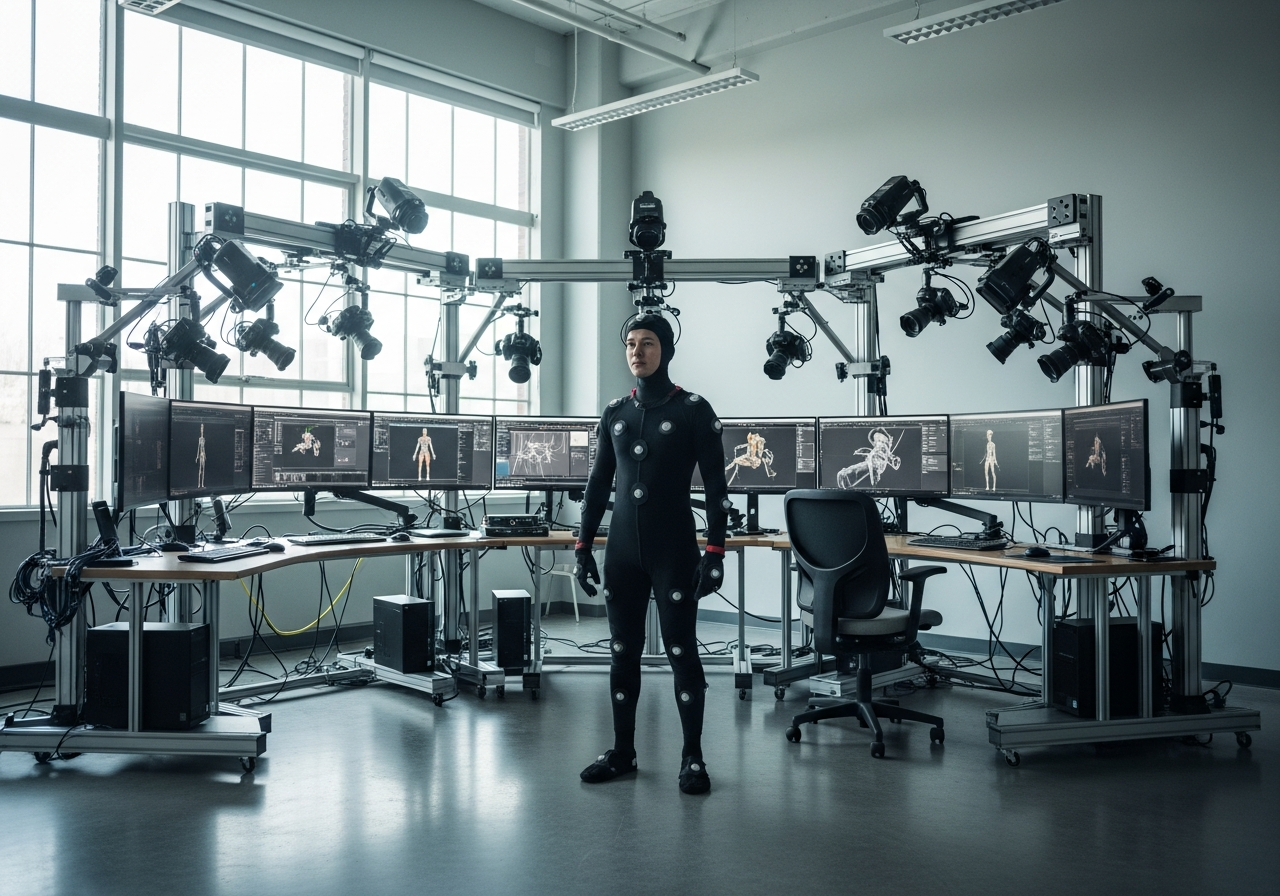
Motion capture represents a transformative technology in animation education, converting live performance data into digital animation through sophisticated tracking systems. For Canadian animation programs, understanding mocap goes beyond simple software operation to encompass performance capture, data cleanup, retargeting workflows, and character-driven storytelling that meets industry pipeline standards.
This comprehensive guide examines how Canadian animation courses structure motion capture learning, comparing theoretical foundations with hands-on tools, workflow integration, and portfolio outcomes. Rather than focusing on hardware setup, we’ll explore course-level understanding that prepares students for collaborative animation pipelines in film, games, and VFX industries.
What motion capture means in an animation course
Motion capture in educational contexts transforms from a technical process into a complete animation methodology that bridges performance art with digital character work. Students learn to view mocap as performance data converted for animation, where human movement becomes the foundation for believable character motion rather than a replacement for traditional animation skills.
The technology differs significantly from keyframe animation by capturing naturalistic motion timing, weight shifts, and subtle performance nuances that would be difficult to recreate manually. However, successful animation courses teach mocap as one tool within a broader character animation toolkit, emphasizing when to use capture data versus hand-keyed animation for specific storytelling needs.
| Concept | What students learn | Why it matters |
|---|---|---|
| Performance capture | Recording actor movement for digital characters | Creates realistic timing and natural motion flow |
| Data cleanup | Removing noise and correcting tracking errors | Ensures professional quality output for production |
| Retargeting workflows | Adapting motion data to different character rigs | Enables motion reuse across multiple characters |
| Pipeline integration | Combining mocap with traditional animation methods | Mirrors real studio collaborative workflows |
| Performance direction | Directing actors for optimal capture sessions | Bridges animation and live-action filmmaking skills |
Core definition and course relevance
Motion capture fundamentally records live motion for digital animation, using optical systems to track performer movement and translate it into character animation data. In course contexts, this means students work with pre-recorded capture sessions rather than operating expensive tracking hardware, focusing on the animation pipeline from import to final character performance.
The technology ties directly to character motion and animation workflows by providing realistic foundation motion that animators can enhance, modify, or blend with keyframed elements. Students learn to evaluate when mocap serves storytelling versus when hand animation better achieves specific character needs, developing critical decision-making skills for professional production environments.
Course relevance extends beyond technical skills to encompass performance understanding, as students must direct capture sessions, understand acting choices, and translate performer intent into compelling character animation that serves narrative goals.
Mocap vs keyframing in student workflows
| Method | Strength | Limitation |
|---|---|---|
| Motion capture | Natural timing and realistic weight shifts | Limited to physically possible movements |
| Keyframe animation | Complete creative control and stylization | Time-intensive for realistic human motion |
| Hybrid workflow | Combines natural motion with creative enhancement | Requires understanding of both methodologies |
School projects typically emphasize hybrid workflows where students use motion capture as a foundation and enhance it with keyframed adjustments, teaching them to leverage the strengths of both approaches. Class assignments often require students to demonstrate when pure mocap serves the story versus when creative keyframe enhancements elevate the performance beyond realistic human movement.
What Canadian animation courses typically cover
Canadian animation programs structure motion capture curriculum around progressive skill building, starting with fundamental concepts and advancing through complex pipeline integration. The curriculum typically spans multiple semesters, allowing students to develop both technical proficiency and creative judgment in applying mocap to character-driven projects.
Software training integrates with hands-on exercises that mirror professional production pipelines, emphasizing collaborative workflows where students work in teams to complete character animation projects. Project-based learning connects technical skills to storytelling outcomes, ensuring students understand mocap as a creative tool rather than just a technical process.
- Fundamental motion capture theory and performance analysis
- Maya and MotionBuilder pipeline integration workflows
- Data cleanup techniques and quality control processes
- Character rigging for motion capture retargeting
- Performance direction and capture session planning
- Hybrid animation combining mocap with keyframe enhancement
- Industry collaboration methods and file management systems
Common curriculum themes
Curriculum fundamentals establish motion capture within broader animation principles, teaching students to evaluate performance quality, understand character motivation, and translate actor choices into compelling digital performances. Pipeline logic connects technical processes to creative outcomes, showing how cleanup, retargeting, and enhancement serve storytelling rather than existing as isolated technical tasks.
Character-focused assignments require students to work with specific personality types, emotional ranges, and physical characteristics that challenge both technical skills and creative problem-solving. Progressive exercises build complexity from simple walk cycles to complex emotional performances, with each assignment reinforcing previous skills while introducing new challenges.
Software tools are introduced in service of creative goals, with technical training always tied to specific character animation outcomes that students can evaluate for storytelling effectiveness and professional quality standards.
Software and tools students need to understand
Professional motion capture workflows in Canadian animation courses center on Maya and MotionBuilder as core software platforms, with students learning how these tools integrate within broader animation pipelines. The focus extends beyond software operation to encompass data handling, quality control, and collaborative file management that reflects industry production standards.
Key technical skills include rigging for motion capture data, cleanup processes that maintain performance quality while removing technical artifacts, and retargeting workflows that adapt motion data across different character proportions and styles. Students develop proficiency in layering keyframe animation over motion capture foundations, creating hybrid performances that combine realistic motion with creative enhancement.
| Tool/Skill | Role in the workflow | Course use |
|---|---|---|
| Autodesk Maya | Character rigging and final animation polish | Primary workspace for student animation projects |
| MotionBuilder | Motion capture data import and cleanup | Lab exercises in data processing and retargeting |
| Character rigging | Preparing digital skeletons for mocap data | Technical assignments building rig compatibility |
| Data cleanup | Removing noise and correcting tracking errors | Quality control exercises with real capture data |
| Retargeting systems | Adapting motion across different character proportions | Cross-character animation projects and variations |
| Performance analysis | Evaluating actor choices and motion quality | Critique sessions and performance direction training |
Core software stack
| Software | Primary use | Student outcome |
|---|---|---|
| Maya | Final animation assembly and rendering | Polished character performances for portfolio |
| MotionBuilder | Mocap import, cleanup, and retargeting | Technical proficiency in data processing |
| Pipeline tools | File management and collaboration workflows | Industry-ready collaborative skills |
Maya and MotionBuilder integration teaches students to move seamlessly between platforms, importing cleaned motion capture data into Maya for final character animation polish and rendering. The pipeline progression moves from MotionBuilder’s specialized mocap tools to Maya’s comprehensive animation environment, with students learning when each software best serves specific workflow needs.
Technical skills tied to the tools
- Optical system setup understanding and capture session preparation
- Data import workflows and file format compatibility management
- Cleanup techniques removing noise while preserving performance quality
- Character rig preparation and motion capture skeleton mapping
- Retargeting processes adapting motion across different character proportions
- Layering keyframe enhancements over motion capture foundations
These technical workflows are framed as lab-based, repeatable processes that students can apply across different projects and character types. Each skill connects to specific animation outcomes, with students learning to evaluate technical quality alongside creative effectiveness in their character performances.
The emphasis on repeatability prepares students for production environments where consistency and efficiency matter as much as creative results, teaching them to develop reliable workflows that serve both individual projects and collaborative team efforts.
How course structure builds motion capture understanding
Canadian animation courses structure motion capture learning through carefully sequenced modules that progress from fundamental concepts to production-ready character performances. The step-by-step progression typically begins with performance analysis and motion principles, advances through technical data handling and cleanup, and culminates in complex character-driven projects that combine multiple mocap techniques with traditional animation skills.
Instructor demonstrations provide students with clear examples of professional workflows, showing how decisions at each pipeline stage affect final animation quality. Regular critique sessions allow students to evaluate their work against industry standards while developing the analytical skills necessary for self-directed improvement and collaborative feedback in professional environments.
Assessment structures reward both technical proficiency and creative application, with students required to demonstrate not only software competency but also storytelling effectiveness in their character animation work. This dual focus ensures graduates understand motion capture as a creative tool that serves narrative goals rather than a purely technical process.
From fundamentals to production-ready exercises
Learning progression begins with motion capture basics, including performance analysis, data quality evaluation, and understanding how actor choices translate into digital character animation. Students start by working with pre-recorded capture sessions, learning to identify quality motion data and understand how different performance styles serve various character types and narrative needs.
Progressive exercises build complexity systematically, with early assignments focusing on simple actions like walks and gestures before advancing to emotional performances, character interactions, and complex sequences that require multiple mocap elements. Each assignment reinforces previous technical skills while introducing new creative challenges that mirror professional production demands.
Advanced exercises require students to direct their own capture sessions, make creative decisions about performance style, and integrate motion capture with keyframe animation to create polished character clips suitable for professional portfolios. Critique feedback throughout this progression helps students develop the analytical skills necessary for self-directed improvement and collaborative professional work.
The culmination involves thesis projects or capstone assignments where students demonstrate mastery across the entire mocap pipeline, from performance direction through final character animation, proving their readiness for entry-level positions in animation, games, or VFX industries.
How to evaluate a Canadian program for mocap depth
Evaluating motion capture programs requires looking beyond course descriptions to examine actual student work, faculty expertise, and curriculum integration with broader animation pipelines. Strong programs demonstrate clear progression from technical skills to creative application, with student portfolios showing sophisticated understanding of when and how to use mocap effectively for character-driven storytelling.
Quality indicators include faculty with industry experience, access to professional-grade software and capture data, and curriculum that treats mocap as part of comprehensive animation training rather than an isolated technical skill. The best programs show evidence of graduates working in film, games, and VFX industries, with alumni success indicating effective preparation for professional animation careers.
| Criterion | Strong signal | Weak signal |
|---|---|---|
| Portfolio quality | Character-driven clips with clear storytelling | Technical demos without performance context |
| Curriculum integration | Mocap embedded in broader animation pipeline | Mocap taught as isolated technical skill |
| Faculty expertise | Industry professionals with production credits | Academic background without studio experience |
| Graduate outcomes | Alumni working in animation studios | Limited industry placement tracking |
| Project scope | Complex character performances and storytelling | Simple technical exercises only |
Program quality signals
| Signal | What it indicates | Why it matters |
|---|---|---|
| Student reel quality | Professional-level character animation work | Demonstrates effective teaching and learning outcomes |
| Pipeline emphasis | Integration with broader production workflows | Prepares students for collaborative studio work |
| Cleanup coverage | Thorough training in data quality control | Essential skill for professional mocap work |
| Retargeting depth | Advanced character adaptation techniques | Enables versatility across different projects |
| Critique structure | Regular feedback on creative and technical work | Develops professional self-evaluation skills |
Strong programs showcase student work that demonstrates sophisticated understanding of performance, character development, and storytelling through motion capture technology. Portfolio focus indicates whether students learn to create compelling character animation or merely demonstrate technical software competency without creative context.
Comprehensive coverage of cleanup, retargeting, and critique processes signals programs that prepare students for the full range of professional mocap work, from technical data handling to creative character development that serves narrative goals in film, games, and VFX production.
Questions students should ask
- What motion capture hardware and software will I have access to during the program?
- How much hands-on time is allocated for individual mocap projects and assignments?
- Do faculty have current industry experience in motion capture production workflows?
- What type of feedback and critique structure supports mocap skill development?
- Can I see examples of recent graduate portfolios featuring motion capture work?
- How does the mocap curriculum integrate with broader animation and storytelling courses?
- What industry connections does the program maintain for internships and job placement?
Common mocap workflow skills students should master
Professional motion capture workflows require students to master a sequence of interconnected skills that transform raw performance data into polished character animation suitable for film, games, or VFX production. The animation pipeline emphasizes clean data handling, believable motion enhancement, and collaborative outputs that integrate seamlessly with broader production workflows.
Students must develop both technical proficiency and creative judgment, learning when to preserve natural motion qualities and when to enhance performances with keyframe animation for storytelling effectiveness. The workflow sequence teaches systematic approaches to data handling while maintaining focus on character-driven outcomes that serve narrative goals.
- Performance analysis and capture session planning with clear character objectives
- Data import and initial quality assessment using professional software workflows
- Comprehensive cleanup removing noise while preserving essential performance qualities
- Character retargeting adapting motion data across different skeletal proportions
- Creative enhancement layering keyframe animation over mocap foundations
- Pipeline integration ensuring compatibility with collaborative production workflows
- Quality control and final polish creating sharable, professional-grade character animation
Practical workflow sequence
- Capture preparation including performance direction and technical setup verification
- Data import and initial assessment evaluating motion quality and completeness
- Systematic cleanup removing tracking errors while preserving performance nuances
- Character retargeting adapting motion to specific digital character proportions
- Creative enhancement adding keyframe polish and storytelling refinements
- Integration testing ensuring compatibility with rendering and effects pipelines
- Final quality control producing sharable, character-driven animation suitable for professional portfolios
This sequence emphasizes repeatability and quality control, with each step building toward character-driven animation that serves storytelling goals. Students learn to evaluate their work at each stage, developing the analytical skills necessary for professional self-direction and collaborative feedback in studio environments.
The workflow culminates in sharable animation clips that demonstrate both technical proficiency and creative understanding, proving student readiness for entry-level positions in animation, games, or VFX industries where mocap skills contribute to larger production goals.
Professional workflows stress collaborative compatibility, with students learning file management, naming conventions, and handoff procedures that enable their work to integrate seamlessly with broader production pipelines involving multiple artists and technical specialists.
Portfolio outcomes and career use cases
Motion capture skills translate directly into job-ready applications across film, games, and VFX industries, with student portfolio work demonstrating specific competencies that employers value in entry-level animation positions. Portfolio pieces must showcase both technical proficiency and creative application, proving students can use mocap technology to serve storytelling goals rather than merely demonstrate software operation.
Successful portfolios feature variety in character types, performance styles, and technical approaches, showing adaptability across different project requirements and production contexts. Industry relevance depends on students demonstrating understanding of collaborative workflows, quality standards, and creative decision-making that mirrors professional animation production environments.
| Portfolio piece | Skill demonstrated | Industry relevance |
|---|---|---|
| Character performance clip | Emotional acting and motion quality control | Film and TV character animation roles |
| Action sequence | Dynamic motion and impact timing | Game animation and action cinematics |
| Multi-character interaction | Complex scene management and timing | VFX and crowd simulation workflows |
| Creature animation | Retargeting and anatomical adaptation | Fantasy and sci-fi production specialization |
| Hybrid mocap/keyframe | Creative enhancement and stylization | Senior animator and creative leadership roles |
Portfolio pieces that prove understanding
Effective portfolio clips demonstrate motion capture skills through character-driven performances that showcase both technical cleanup proficiency and creative enhancement abilities. Acting-focused pieces should feature clear emotional choices, believable character motivation, and polished motion quality that proves students can direct capture sessions and refine performance data into compelling animation.
Cleaned mocap takes reveal technical competency in data quality control, noise removal, and motion refinement without losing natural performance qualities that make motion capture valuable. Portfolio variety should include different character types, performance styles, and technical challenges that demonstrate adaptability across various production contexts and creative requirements.
Strong portfolio examples feature before-and-after comparisons showing raw capture data alongside polished final animation, proving students understand the full workflow from initial performance through professional-quality character animation suitable for film, games, or VFX production environments.
Where the skill is applied
| Sector | Typical mocap use | Typical output |
|---|---|---|
| Film and television | Character performance and creature animation | Photorealistic digital characters and creatures |
| Video games | Player character movement and NPC behavior | Interactive animation systems and cutscenes |
| VFX and visualization | Crowd simulation and background characters | Large-scale character animation and environments |
Motion capture specialization enhances employability across multiple animation sectors, with graduates finding opportunities in film studios, game development companies, and VFX houses that value technical pipeline skills combined with creative character animation abilities. Collaborative experience gained through mocap workflows translates directly to professional production environments where teamwork and technical communication are essential.
How this topic compares across top Canadian animation-school content
Canadian animation programs vary significantly in their motion capture curriculum depth and integration with broader animation training, with some schools offering comprehensive pipeline education while others treat mocap as an isolated technical skill. The most effective programs embed motion capture within character animation and storytelling courses, ensuring students understand the technology as a creative tool rather than just a software competency.
Content gaps across programs often involve insufficient coverage of collaborative workflows, limited access to professional-quality capture data, or emphasis on technical operation without creative application. The strongest programs address these gaps by providing industry-standard software training, comprehensive project-based learning, and faculty with current professional experience in motion capture production.
Conceptual learning opportunities focus on decision-making frameworks that help students evaluate when motion capture serves storytelling goals versus when traditional keyframe animation better achieves specific character needs, developing critical thinking skills essential for professional animation careers.
Content gap and opportunity
Many Canadian animation schools name motion capture tools in their curriculum but fail to provide comprehensive workflow explanation that connects technical skills to creative outcomes and professional pipeline integration. This gap leaves students with software familiarity but insufficient understanding of how mocap serves storytelling goals within collaborative production environments.
The opportunity lies in positioning motion capture curriculum around practical decision-making and creative application rather than isolated technical training, helping prospective students evaluate programs based on workflow depth, faculty expertise, and graduate outcomes that demonstrate industry readiness.
Comprehensive content should address performance direction, collaborative workflows, quality control standards, and creative enhancement techniques that distinguish professional motion capture work from basic software operation, preparing students for meaningful contributions to animation, games, and VFX production teams.